
2/19/26 Husaina Poonawala #HuskyHome
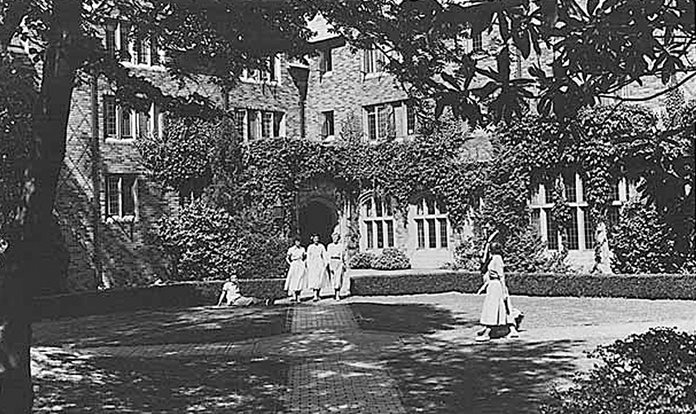
Long before glass towers and bustling cafes defined campus life, Hansee Hall quietly welcomed UW’s earliest residential students in the early 1920s. As the university’s first residence hall, Hansee marked the beginning of the on-campus community, offering students not just a place to sleep, but a place to belong. You can almost imagine the first residents arriving with suitcases in hand, stepping into a new chapter of college life.
Designed in a classic collegiate Gothic style, Hansee still feels distinctly different today. Its winding staircases, narrow hallways and uniquely shaped rooms give the building a lived-in charm that modern dorms can’t quite replicate. Lounges with pianos and shared kitchens encourage students to linger, turning everyday moments into meaningful connections.
One of Hansee’s lesser-known strengths is its intimate size. With fewer residents than many newer halls, it has long fostered a close-knit, reflective community, perfect for late-night conversations, quiet study sessions, and friendships that grow naturally over time. It’s a space that invites calm in the middle of a busy campus.
Hansee Hall is named after Martha Lois Hansee, who was the Dean of Women and a professor of Greek Language and Literature. The Hansee wings are named after Northwest women pioneers: Eliza Leary, Isabelle Austin, Ruth Mckee and Kathryn Blaine.
Legendary alumni have walked these same paths, including Bruce Lee, who studied philosophy at UW in the late 1950s. While campus has evolved, Hansee remains a living reminder of UW’s roots. For students who live here, it’s more than a dorm—it’s a chance to be part of a century-long story, where history, community and quiet moments continue to intersect.